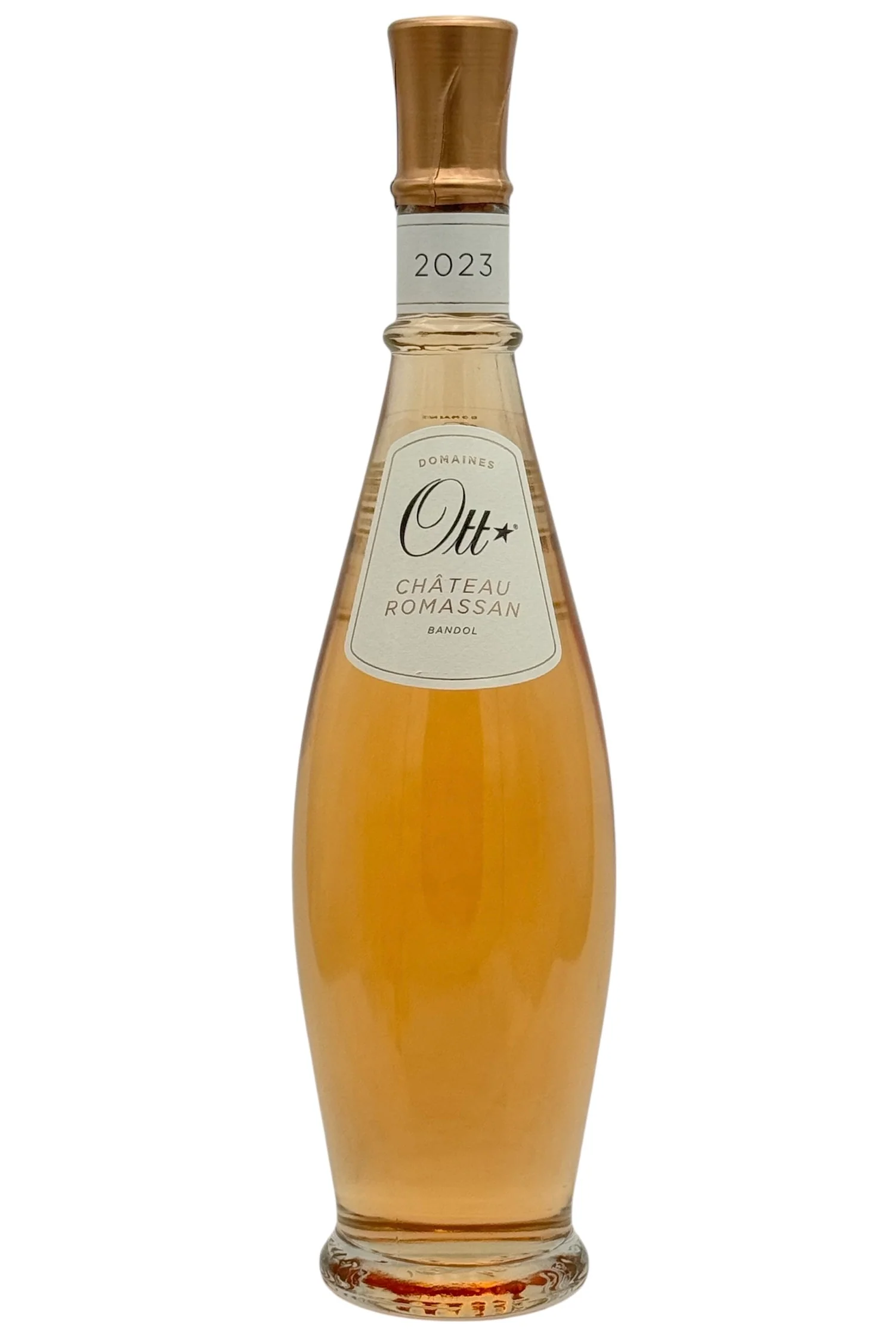
Domaines Ott 2024 Château Romassan Bandol Rosé Double Magnum 3 Liter
There are two conversations about Provence rosé. The first conversation is about Whispering Angel, Rock Angel, Minuty, and the pale, delicate, immediately appealing style that has conquered global rosé consumption over the past two decades — wines designed to be beautiful and accessible and entirely pleasurable, best in their youth, at their most vivid when drunk chilled in the first one or two years. This is the most important rosé conversation in the world right now and it deserves every word written about it.
The second conversation is about Bandol. And the second conversation is older, quieter, and more specifically about what rosé actually is when pushed to its absolute limit.
Bandol is the only appellation in France whose regulations require a minimum of 50% Mourvèdre in rosé production. Mourvèdre — the thick-skinned, late-ripening, structurally powerful grape variety that produces Bandol's celebrated red wines — brings qualities to rosé that the lighter Grenache, Cinsault, and Syrah varieties of Côtes de Provence cannot: weight, spice, tannin, a savory mineral complexity, and the ability to age in the bottle for five, ten, even fifteen years while developing a depth and complexity that no Côtes de Provence rosé approaches. Bandol rosé is the category's most serious, most structured, and most cellar-worthy expression. And Château Romassan is Bandol rosé's most celebrated and most consistently referenced benchmark.
Domaines Ott established Château Romassan in 1956 — a 148-acre estate at the foot of Le Castellet, among Bandol's most elevated and most specifically terroir-defined vineyard sites, whose poor soils of limestone, sandstone, and marine upper cretaceous marls combined with the sea air of the Bay of Bandol produce rosé of unusual structural integrity. The amphora-inspired bottle that makes every Domaines Ott wine instantly recognizable has graced the finest restaurant tables in the world since the 1930s — one of the first rosés ever to appear on the menus of the finest hotels and restaurants globally.
The 2024 received 94 Points from Vinous: "a wine of supreme textural finesse and elegance — beautifully weighted, broad and nearly opulent, yet in no way heavy — drapes a blanket of floral-inflected orchard fruit across the tongue — rosewater, orange confit and a tickle of sea salt last well after the wine has exited the stage. I wouldn't hesitate to age this Bandol for a few years to allow even further complexity to develop. Bravo." Wine Spectator also awarded 94 Points.
In a 3-liter double magnum. The format that ages most gracefully of all.
Origins & Craftsmanship
The Ott family arrived in Provence from Alsace in 1896 and progressively assembled one of the region's most distinctive wine estates across three properties: Château de Selle (Côtes de Provence, acquired 1912), Clos Mireille (Côtes de Provence, 1930), and Château Romassan (Bandol, 1956). The family reorganized and upgraded the Romassan vineyards and 18th-century château after acquisition, applying the meticulous vine-tending philosophy that has defined Domaines Ott across three estates and over a century of Provençal wine production. In 2004, Louis Roederer — the prestigious Champagne house whose ownership portfolio includes Cristal, Roederer Estate, Deutz, Ramos Pinto, and Miraval — acquired Domaines Ott, with Christian and Jean-François Ott continuing to lead production as family members and shareholders.
Château Romassan occupies 148 acres (70 hectares) at the foot of Le Castellet — the medieval hilltop village that presides over the eastern Bandol appellation — on soils that are among the most specifically challenging and the most specifically quality-producing in all of Provence: poor, arid soils composed of limestone, sandstone, and marine upper cretaceous marls, the specific geological combination that forces vine roots deep into the rock in search of water and mineral nutrients while producing the low yields of concentrated, intensely flavored fruit that structured rosé requires. The sea air from the Bay of Bandol — whose proximity moderates the appellation's temperature extremes and deposits the specific saline maritime quality that Bandol wines carry — compensates for the terroir's acidity and low rainfall. The vineyard's terraced landscape — built from hard stone, the ancient Bandol terraces visible throughout the appellation — gives each plot varying exposures that the Ott team works individually according to each parcel's intrinsic qualities.
The grape blend — Mourvèdre dominant, complemented by Grenache, Cinsault, and Syrah — is the Bandol AOC's most specifically distinguishing production requirement. Mourvèdre's contribution is everything that makes Bandol rosé specifically different: the structural weight and the solidity that provide aging potential, the spice and the tannin that add complexity, and the Mourvèdre-specific black cherry, tobacco, and garrigue aromatic character that Grenache and Cinsault alone cannot produce. Grenache adds full-bodied texture. Cinsault adds softness and accessibility. Syrah adds fruity roundness. The wine is hand-harvested and sorted very selectively, aged in oak, and presented in the distinctive amphora-inspired bottle — designed by the Ott family and inspired by Roman amphorae found in the Provençal countryside — that has made Domaines Ott wines among the most visually distinctive and the most specifically prestige-communicating rosé presentations in the world.
The 3-liter double magnum format represents four standard bottles in a single vessel whose larger volume-to-surface-area ratio produces the most even, the most gradual, and the most specifically graceful aging available for any wine — particularly appropriate for a Bandol rosé whose structured Mourvèdre backbone and genuine aging potential make the extended, slow maturation of the double magnum format the most specifically quality-enhancing serving decision available.
Critics Reviews
Vinous — 94 Points (2024):
"The 2024 Rosé Château Romassan is a wine of supreme textural finesse and elegance. Beautifully weighted, broad and nearly opulent, yet in no way heavy, the 2024 drapes a blanket of floral-inflected orchard fruit across the tongue, coating every corner of the mouth through the long, focused finish. Rosewater, orange confit and a tickle of sea salt last well after the wine has exited the stage. This is such an intentional Rosé made with the highest level of craftsmanship. I wouldn't hesitate to age this Bandol for a few years to allow even further complexity to develop. Bravo."
Wine Spectator — 94 Points (2024):
"A sophisticated, polished Bandol, with a seductive, juicy palate that's all rounded off. Hums with vivid energy behind its notes of melon and garrigue."
Revue des Vins de France — 91 Points (2026 edition)
Guide Hachette des Vins 2026 — ★★
Château Romassan official 2024 tasting notes:
"Pale, ethereal pink colour tinted with gold or orange. Nose: A bouquet of citrus fruits and white orchard flowers. Palate: Immediate effect is lively and bright, revealing notes of pink grapefruit, fleshy fruit and — once the wine has had a chance to breathe — hints of fruit tart. Finish: Complex and lasting."
Wine Spectrum (2024 — alternate cuvée description):
Peach-colored hue with a dash of copper. Nose: Citrus and passion fruit with beautiful aromatic intensity. Palate: Full and round, carried by the freshness of mandarin and enhanced by a subtle touch of Sichuan red pepper. Rich and persistent finish, highlighted by notes of pomelo pith.
Falstaff (2022 vintage — program house style):
"Bright medium salmon pink. Full-bodied bouquet, characterised by black cherry, blackberry and subtle tobacco savouriness. Zesty, savoury salted lemon and soft tannins on the palate. Good length with a tasty tart touch of red grapefruit on the finish."
Vinatis (2024 confirmed):
"Bouche dense, soyeuse avec une agréable tension. Arômes gourmands de pamplemousse et de pêche de vigne, lui octroyant une finale persistante entre réglisse et épice." (Dense, silky palate with pleasant tension. Flavors of grapefruit and vine peach, with a persistent finish of licorice and spice.)
Tasting Profile
Nose
Pale, ethereal pink tinted with gold and copper highlights — the Mourvèdre's distinctive contribution to the color in a Bandol rosé of unmistakable seriousness and structure. The nose opens with the most specifically and the most memorably elegant quality in the Bandol rosé category: citrus fruits and white orchard flowers together, the freshness of pink grapefruit and the delicacy of white blossoms creating an aromatic picture of genuine refinement before anything darker or more specifically Mourvèdre-driven arrives. Passion fruit adds the most specifically tropical and the most vivid secondary aromatic from the Wine Spectrum note. Melon adds the most broadly appealing and the most immediately accessible secondary fruit quality from the Wine Spectator observation. The garrigue — that specifically and unmistakably Provençal herbal-scrub aromatic of thyme, rosemary, and wild lavender — hums beneath the citrus and floral character, the Bandol terroir's most enduringly specific and the most regionally distinctive secondary quality. With breathing — essential for Bandol rosé — hints of fleshy fruit and fruit tart emerge. The sea air of Bandol is present as the most barely-there and the most specifically coastal secondary dimension.
Palate
Supreme textural finesse — Vinous's most specifically accurate and the most immediately compelling 2024 palate characterization. The entry is lively and bright — the citrus and fresh fruit most immediately apparent in a palate of genuine energy. The weight then builds: beautifully weighted, broad, and nearly opulent in the Vinous characterization's most paradoxical and the most accurately observed description for a rosé — the Mourvèdre's structural contribution providing a fullness and a roundness that lighter-variety Côtes de Provence rosé cannot approach. A blanket of floral-inflected orchard fruit coats every corner of the mouth in the Vinous tasting's most specifically lush and the most directly coating characterization. Pink grapefruit and vine peach carry the mid-palate with the most vivid fruit forward. Mandarin adds the freshest and the most specifically vibrant citrus secondary quality. A subtle touch of Sichuan red pepper from the Wine Spectrum note adds the most memorably unusual and the most specifically exotic spice secondary dimension. Soft tannins — present and adding structure without grip — confirm the Mourvèdre's most structural and the most age-confirming contribution to the palate's architecture.
Finish
Long, focused, and salt-touched. Rosewater and orange confit carry the close most specifically in the Vinous tasting's most beautiful finish characterization — delicate, slightly floral, and adding an oriental dessert-adjacent final dimension. A tickle of sea salt lingers after the wine has exited the stage — the Bay of Bandol's most enduringly coastal and the most specifically maritime contribution at the very close. Pomelo pith adds the most clean and the most precisely dry final citrus quality. A persistent finish of licorice and spice from the Vinatis note rounds the whole experience. Long, complex, and entirely confirming the Vinous reviewer's judgment that this wine will reward several years of additional cellar aging — particularly in the 3-liter double magnum format, where the aging will be most gradual and the most graceful.
Quick Overview
| Category | Details |
|---|---|
| Appellation | Bandol AOC — Provence, France |
| Style | Rosé — Mourvèdre-Dominant · Oak-Aged |
| Vintage | 2024 |
| Format | Double Magnum — 3 Liters (4 standard bottles) |
| Estate | Château Romassan — Le Castellet, Bandol |
| Family | Ott family — Provence since 1896 · Romassan since 1956 |
| Owner | Louis Roederer Group (since 2004) · Ott family as shareholders |
| Family Leads | Christian Ott + Jean-François Ott |
| Domaines Ott Portfolio | Château Romassan (Bandol) · Clos Mireille · Château de Selle (both Côtes de Provence) |
| Estate Size | 148 acres / 70 hectares |
| Location | Foot of Le Castellet · Bay of Bandol maritime influence |
| Soils | Limestone · Sandstone · Marine upper cretaceous marls |
| Vine Age | Average 14 years |
| Landscape | Ancient terraced vineyards — hard stone terraces |
| Grape Blend | Mourvèdre dominant · Grenache · Cinsault · Syrah |
| Mourvèdre Role | Solidity · Structure · Spice · Aging potential — the Bandol signature |
| Bandol AOC Requirement | Minimum 50% Mourvèdre — distinguishes Bandol from all other Provence rosé |
| Vinification | Hand-harvested · Selective sorting · Oak aging |
| Bottle Design | Amphora-inspired — Roman amphora tradition of Provence · Ott family design |
| Critics | Vinous 94 Pts · Wine Spectator 94 Pts · RVF 91 Pts |
| Aging | Now through 2030+ — designed to age · Double magnum format especially suited |
| Bandol vs Côtes de Provence | More structured · More complex · More age-worthy · Mourvèdre-forward |
| Double Magnum Advantage | Slower, more even aging than 750ml · More graceful development · Occasion-defining format |
| Style / Identity | The benchmark age-worthy Bandol rosé — citrus, florals, sea salt, Mourvèdre structure |
| Aromas & Flavors | Pink grapefruit, white orchard flowers, passion fruit, melon, garrigue, citrus, mandarin, vine peach, rosewater, orange confit, Sichuan pepper, sea salt, pomelo pith, licorice, spice |
| Bottle Size | 3 Liter / Double Magnum |
Food Pairings
The Mourvèdre structure, savory garrigue, and sea salt finish make Château Romassan the most specifically food-serious and the most broadly culinary-versatile rosé in the Blackwell's section — beyond the summer aperitif role of lighter Côtes de Provence rosés:
- Flambéed prawns — the estate's own most specifically recommended pairing
- Very tender red meat — the Mourvèdre's structural weight supporting the protein
- Fish fillet — the sea salt and grapefruit carrying through the fish's richness
- Bouillabaisse — the most regionally authentic and the most specifically Provençal pairing
- Grilled lobster
- Ratatouille — the garrigue echoing the Provençal herb preparation
- Aged cheeses — the Mourvèdre's tannin finding natural support
Product Information
Product Information
Shipping & Returns
Shipping & Returns
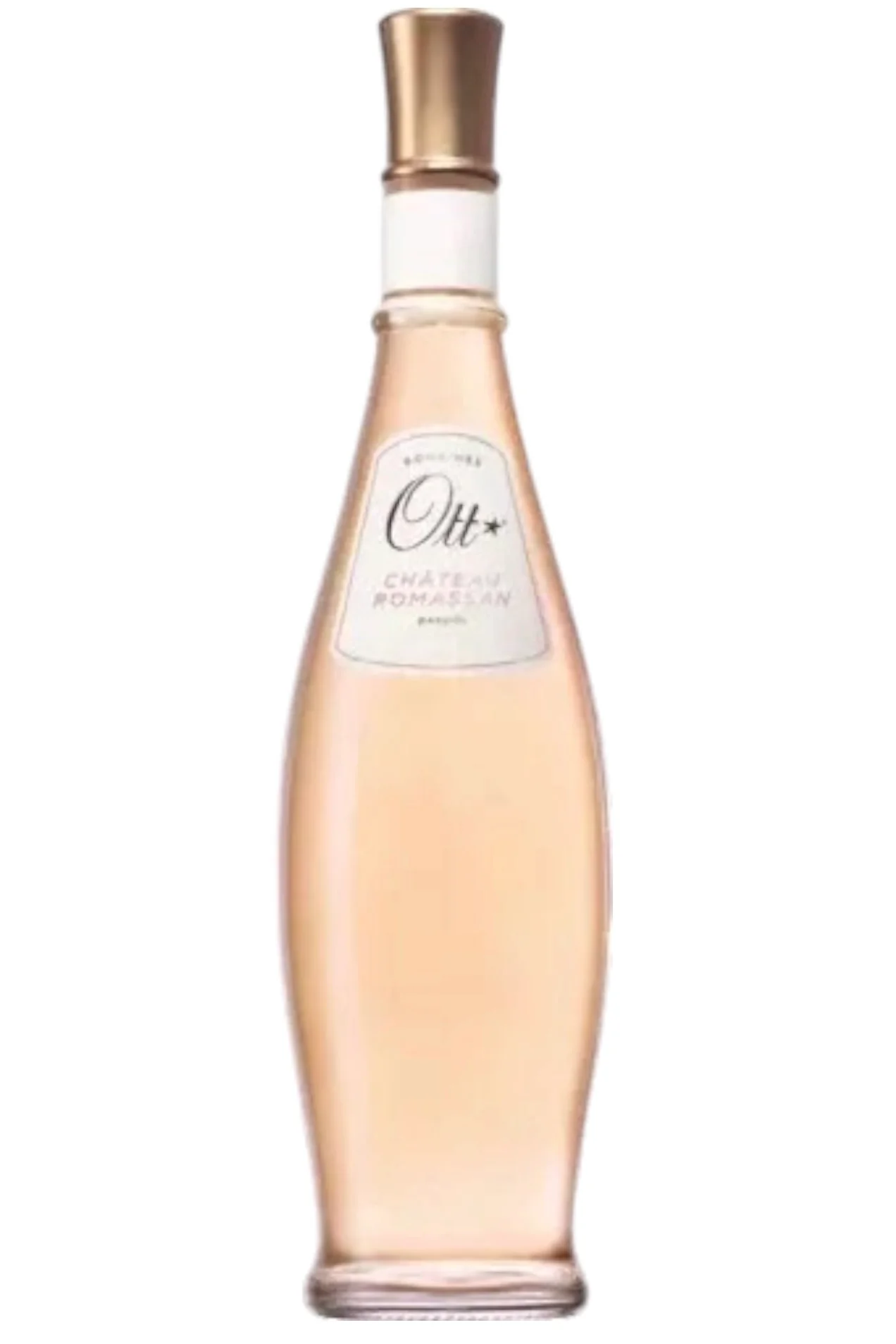
Domaines Ott 2024 Château Romassan Bandol Rosé Double Magnum 3 Liter
Domaines Ott 2024 Château Romassan Bandol Rosé Double Magnum 3 Liter
There are two conversations about Provence rosé. The first conversation is about Whispering Angel, Rock Angel, Minuty, and the pale, delicate, immediately appealing style that has conquered global rosé consumption over the past two decades — wines designed to be beautiful and accessible and entirely pleasurable, best in their youth, at their most vivid when drunk chilled in the first one or two years. This is the most important rosé conversation in the world right now and it deserves every word written about it.
The second conversation is about Bandol. And the second conversation is older, quieter, and more specifically about what rosé actually is when pushed to its absolute limit.
Bandol is the only appellation in France whose regulations require a minimum of 50% Mourvèdre in rosé production. Mourvèdre — the thick-skinned, late-ripening, structurally powerful grape variety that produces Bandol's celebrated red wines — brings qualities to rosé that the lighter Grenache, Cinsault, and Syrah varieties of Côtes de Provence cannot: weight, spice, tannin, a savory mineral complexity, and the ability to age in the bottle for five, ten, even fifteen years while developing a depth and complexity that no Côtes de Provence rosé approaches. Bandol rosé is the category's most serious, most structured, and most cellar-worthy expression. And Château Romassan is Bandol rosé's most celebrated and most consistently referenced benchmark.
Domaines Ott established Château Romassan in 1956 — a 148-acre estate at the foot of Le Castellet, among Bandol's most elevated and most specifically terroir-defined vineyard sites, whose poor soils of limestone, sandstone, and marine upper cretaceous marls combined with the sea air of the Bay of Bandol produce rosé of unusual structural integrity. The amphora-inspired bottle that makes every Domaines Ott wine instantly recognizable has graced the finest restaurant tables in the world since the 1930s — one of the first rosés ever to appear on the menus of the finest hotels and restaurants globally.
The 2024 received 94 Points from Vinous: "a wine of supreme textural finesse and elegance — beautifully weighted, broad and nearly opulent, yet in no way heavy — drapes a blanket of floral-inflected orchard fruit across the tongue — rosewater, orange confit and a tickle of sea salt last well after the wine has exited the stage. I wouldn't hesitate to age this Bandol for a few years to allow even further complexity to develop. Bravo." Wine Spectator also awarded 94 Points.
In a 3-liter double magnum. The format that ages most gracefully of all.
Origins & Craftsmanship
The Ott family arrived in Provence from Alsace in 1896 and progressively assembled one of the region's most distinctive wine estates across three properties: Château de Selle (Côtes de Provence, acquired 1912), Clos Mireille (Côtes de Provence, 1930), and Château Romassan (Bandol, 1956). The family reorganized and upgraded the Romassan vineyards and 18th-century château after acquisition, applying the meticulous vine-tending philosophy that has defined Domaines Ott across three estates and over a century of Provençal wine production. In 2004, Louis Roederer — the prestigious Champagne house whose ownership portfolio includes Cristal, Roederer Estate, Deutz, Ramos Pinto, and Miraval — acquired Domaines Ott, with Christian and Jean-François Ott continuing to lead production as family members and shareholders.
Château Romassan occupies 148 acres (70 hectares) at the foot of Le Castellet — the medieval hilltop village that presides over the eastern Bandol appellation — on soils that are among the most specifically challenging and the most specifically quality-producing in all of Provence: poor, arid soils composed of limestone, sandstone, and marine upper cretaceous marls, the specific geological combination that forces vine roots deep into the rock in search of water and mineral nutrients while producing the low yields of concentrated, intensely flavored fruit that structured rosé requires. The sea air from the Bay of Bandol — whose proximity moderates the appellation's temperature extremes and deposits the specific saline maritime quality that Bandol wines carry — compensates for the terroir's acidity and low rainfall. The vineyard's terraced landscape — built from hard stone, the ancient Bandol terraces visible throughout the appellation — gives each plot varying exposures that the Ott team works individually according to each parcel's intrinsic qualities.
The grape blend — Mourvèdre dominant, complemented by Grenache, Cinsault, and Syrah — is the Bandol AOC's most specifically distinguishing production requirement. Mourvèdre's contribution is everything that makes Bandol rosé specifically different: the structural weight and the solidity that provide aging potential, the spice and the tannin that add complexity, and the Mourvèdre-specific black cherry, tobacco, and garrigue aromatic character that Grenache and Cinsault alone cannot produce. Grenache adds full-bodied texture. Cinsault adds softness and accessibility. Syrah adds fruity roundness. The wine is hand-harvested and sorted very selectively, aged in oak, and presented in the distinctive amphora-inspired bottle — designed by the Ott family and inspired by Roman amphorae found in the Provençal countryside — that has made Domaines Ott wines among the most visually distinctive and the most specifically prestige-communicating rosé presentations in the world.
The 3-liter double magnum format represents four standard bottles in a single vessel whose larger volume-to-surface-area ratio produces the most even, the most gradual, and the most specifically graceful aging available for any wine — particularly appropriate for a Bandol rosé whose structured Mourvèdre backbone and genuine aging potential make the extended, slow maturation of the double magnum format the most specifically quality-enhancing serving decision available.
Critics Reviews
Vinous — 94 Points (2024):
"The 2024 Rosé Château Romassan is a wine of supreme textural finesse and elegance. Beautifully weighted, broad and nearly opulent, yet in no way heavy, the 2024 drapes a blanket of floral-inflected orchard fruit across the tongue, coating every corner of the mouth through the long, focused finish. Rosewater, orange confit and a tickle of sea salt last well after the wine has exited the stage. This is such an intentional Rosé made with the highest level of craftsmanship. I wouldn't hesitate to age this Bandol for a few years to allow even further complexity to develop. Bravo."
Wine Spectator — 94 Points (2024):
"A sophisticated, polished Bandol, with a seductive, juicy palate that's all rounded off. Hums with vivid energy behind its notes of melon and garrigue."
Revue des Vins de France — 91 Points (2026 edition)
Guide Hachette des Vins 2026 — ★★
Château Romassan official 2024 tasting notes:
"Pale, ethereal pink colour tinted with gold or orange. Nose: A bouquet of citrus fruits and white orchard flowers. Palate: Immediate effect is lively and bright, revealing notes of pink grapefruit, fleshy fruit and — once the wine has had a chance to breathe — hints of fruit tart. Finish: Complex and lasting."
Wine Spectrum (2024 — alternate cuvée description):
Peach-colored hue with a dash of copper. Nose: Citrus and passion fruit with beautiful aromatic intensity. Palate: Full and round, carried by the freshness of mandarin and enhanced by a subtle touch of Sichuan red pepper. Rich and persistent finish, highlighted by notes of pomelo pith.
Falstaff (2022 vintage — program house style):
"Bright medium salmon pink. Full-bodied bouquet, characterised by black cherry, blackberry and subtle tobacco savouriness. Zesty, savoury salted lemon and soft tannins on the palate. Good length with a tasty tart touch of red grapefruit on the finish."
Vinatis (2024 confirmed):
"Bouche dense, soyeuse avec une agréable tension. Arômes gourmands de pamplemousse et de pêche de vigne, lui octroyant une finale persistante entre réglisse et épice." (Dense, silky palate with pleasant tension. Flavors of grapefruit and vine peach, with a persistent finish of licorice and spice.)
Tasting Profile
Nose
Pale, ethereal pink tinted with gold and copper highlights — the Mourvèdre's distinctive contribution to the color in a Bandol rosé of unmistakable seriousness and structure. The nose opens with the most specifically and the most memorably elegant quality in the Bandol rosé category: citrus fruits and white orchard flowers together, the freshness of pink grapefruit and the delicacy of white blossoms creating an aromatic picture of genuine refinement before anything darker or more specifically Mourvèdre-driven arrives. Passion fruit adds the most specifically tropical and the most vivid secondary aromatic from the Wine Spectrum note. Melon adds the most broadly appealing and the most immediately accessible secondary fruit quality from the Wine Spectator observation. The garrigue — that specifically and unmistakably Provençal herbal-scrub aromatic of thyme, rosemary, and wild lavender — hums beneath the citrus and floral character, the Bandol terroir's most enduringly specific and the most regionally distinctive secondary quality. With breathing — essential for Bandol rosé — hints of fleshy fruit and fruit tart emerge. The sea air of Bandol is present as the most barely-there and the most specifically coastal secondary dimension.
Palate
Supreme textural finesse — Vinous's most specifically accurate and the most immediately compelling 2024 palate characterization. The entry is lively and bright — the citrus and fresh fruit most immediately apparent in a palate of genuine energy. The weight then builds: beautifully weighted, broad, and nearly opulent in the Vinous characterization's most paradoxical and the most accurately observed description for a rosé — the Mourvèdre's structural contribution providing a fullness and a roundness that lighter-variety Côtes de Provence rosé cannot approach. A blanket of floral-inflected orchard fruit coats every corner of the mouth in the Vinous tasting's most specifically lush and the most directly coating characterization. Pink grapefruit and vine peach carry the mid-palate with the most vivid fruit forward. Mandarin adds the freshest and the most specifically vibrant citrus secondary quality. A subtle touch of Sichuan red pepper from the Wine Spectrum note adds the most memorably unusual and the most specifically exotic spice secondary dimension. Soft tannins — present and adding structure without grip — confirm the Mourvèdre's most structural and the most age-confirming contribution to the palate's architecture.
Finish
Long, focused, and salt-touched. Rosewater and orange confit carry the close most specifically in the Vinous tasting's most beautiful finish characterization — delicate, slightly floral, and adding an oriental dessert-adjacent final dimension. A tickle of sea salt lingers after the wine has exited the stage — the Bay of Bandol's most enduringly coastal and the most specifically maritime contribution at the very close. Pomelo pith adds the most clean and the most precisely dry final citrus quality. A persistent finish of licorice and spice from the Vinatis note rounds the whole experience. Long, complex, and entirely confirming the Vinous reviewer's judgment that this wine will reward several years of additional cellar aging — particularly in the 3-liter double magnum format, where the aging will be most gradual and the most graceful.
Quick Overview
| Category | Details |
|---|---|
| Appellation | Bandol AOC — Provence, France |
| Style | Rosé — Mourvèdre-Dominant · Oak-Aged |
| Vintage | 2024 |
| Format | Double Magnum — 3 Liters (4 standard bottles) |
| Estate | Château Romassan — Le Castellet, Bandol |
| Family | Ott family — Provence since 1896 · Romassan since 1956 |
| Owner | Louis Roederer Group (since 2004) · Ott family as shareholders |
| Family Leads | Christian Ott + Jean-François Ott |
| Domaines Ott Portfolio | Château Romassan (Bandol) · Clos Mireille · Château de Selle (both Côtes de Provence) |
| Estate Size | 148 acres / 70 hectares |
| Location | Foot of Le Castellet · Bay of Bandol maritime influence |
| Soils | Limestone · Sandstone · Marine upper cretaceous marls |
| Vine Age | Average 14 years |
| Landscape | Ancient terraced vineyards — hard stone terraces |
| Grape Blend | Mourvèdre dominant · Grenache · Cinsault · Syrah |
| Mourvèdre Role | Solidity · Structure · Spice · Aging potential — the Bandol signature |
| Bandol AOC Requirement | Minimum 50% Mourvèdre — distinguishes Bandol from all other Provence rosé |
| Vinification | Hand-harvested · Selective sorting · Oak aging |
| Bottle Design | Amphora-inspired — Roman amphora tradition of Provence · Ott family design |
| Critics | Vinous 94 Pts · Wine Spectator 94 Pts · RVF 91 Pts |
| Aging | Now through 2030+ — designed to age · Double magnum format especially suited |
| Bandol vs Côtes de Provence | More structured · More complex · More age-worthy · Mourvèdre-forward |
| Double Magnum Advantage | Slower, more even aging than 750ml · More graceful development · Occasion-defining format |
| Style / Identity | The benchmark age-worthy Bandol rosé — citrus, florals, sea salt, Mourvèdre structure |
| Aromas & Flavors | Pink grapefruit, white orchard flowers, passion fruit, melon, garrigue, citrus, mandarin, vine peach, rosewater, orange confit, Sichuan pepper, sea salt, pomelo pith, licorice, spice |
| Bottle Size | 3 Liter / Double Magnum |
Food Pairings
The Mourvèdre structure, savory garrigue, and sea salt finish make Château Romassan the most specifically food-serious and the most broadly culinary-versatile rosé in the Blackwell's section — beyond the summer aperitif role of lighter Côtes de Provence rosés:
- Flambéed prawns — the estate's own most specifically recommended pairing
- Very tender red meat — the Mourvèdre's structural weight supporting the protein
- Fish fillet — the sea salt and grapefruit carrying through the fish's richness
- Bouillabaisse — the most regionally authentic and the most specifically Provençal pairing
- Grilled lobster
- Ratatouille — the garrigue echoing the Provençal herb preparation
- Aged cheeses — the Mourvèdre's tannin finding natural support
Original: $425.00
-65%$425.00
$148.75Product Information
Product Information
Shipping & Returns
Shipping & Returns
Description
There are two conversations about Provence rosé. The first conversation is about Whispering Angel, Rock Angel, Minuty, and the pale, delicate, immediately appealing style that has conquered global rosé consumption over the past two decades — wines designed to be beautiful and accessible and entirely pleasurable, best in their youth, at their most vivid when drunk chilled in the first one or two years. This is the most important rosé conversation in the world right now and it deserves every word written about it.
The second conversation is about Bandol. And the second conversation is older, quieter, and more specifically about what rosé actually is when pushed to its absolute limit.
Bandol is the only appellation in France whose regulations require a minimum of 50% Mourvèdre in rosé production. Mourvèdre — the thick-skinned, late-ripening, structurally powerful grape variety that produces Bandol's celebrated red wines — brings qualities to rosé that the lighter Grenache, Cinsault, and Syrah varieties of Côtes de Provence cannot: weight, spice, tannin, a savory mineral complexity, and the ability to age in the bottle for five, ten, even fifteen years while developing a depth and complexity that no Côtes de Provence rosé approaches. Bandol rosé is the category's most serious, most structured, and most cellar-worthy expression. And Château Romassan is Bandol rosé's most celebrated and most consistently referenced benchmark.
Domaines Ott established Château Romassan in 1956 — a 148-acre estate at the foot of Le Castellet, among Bandol's most elevated and most specifically terroir-defined vineyard sites, whose poor soils of limestone, sandstone, and marine upper cretaceous marls combined with the sea air of the Bay of Bandol produce rosé of unusual structural integrity. The amphora-inspired bottle that makes every Domaines Ott wine instantly recognizable has graced the finest restaurant tables in the world since the 1930s — one of the first rosés ever to appear on the menus of the finest hotels and restaurants globally.
The 2024 received 94 Points from Vinous: "a wine of supreme textural finesse and elegance — beautifully weighted, broad and nearly opulent, yet in no way heavy — drapes a blanket of floral-inflected orchard fruit across the tongue — rosewater, orange confit and a tickle of sea salt last well after the wine has exited the stage. I wouldn't hesitate to age this Bandol for a few years to allow even further complexity to develop. Bravo." Wine Spectator also awarded 94 Points.
In a 3-liter double magnum. The format that ages most gracefully of all.
Origins & Craftsmanship
The Ott family arrived in Provence from Alsace in 1896 and progressively assembled one of the region's most distinctive wine estates across three properties: Château de Selle (Côtes de Provence, acquired 1912), Clos Mireille (Côtes de Provence, 1930), and Château Romassan (Bandol, 1956). The family reorganized and upgraded the Romassan vineyards and 18th-century château after acquisition, applying the meticulous vine-tending philosophy that has defined Domaines Ott across three estates and over a century of Provençal wine production. In 2004, Louis Roederer — the prestigious Champagne house whose ownership portfolio includes Cristal, Roederer Estate, Deutz, Ramos Pinto, and Miraval — acquired Domaines Ott, with Christian and Jean-François Ott continuing to lead production as family members and shareholders.
Château Romassan occupies 148 acres (70 hectares) at the foot of Le Castellet — the medieval hilltop village that presides over the eastern Bandol appellation — on soils that are among the most specifically challenging and the most specifically quality-producing in all of Provence: poor, arid soils composed of limestone, sandstone, and marine upper cretaceous marls, the specific geological combination that forces vine roots deep into the rock in search of water and mineral nutrients while producing the low yields of concentrated, intensely flavored fruit that structured rosé requires. The sea air from the Bay of Bandol — whose proximity moderates the appellation's temperature extremes and deposits the specific saline maritime quality that Bandol wines carry — compensates for the terroir's acidity and low rainfall. The vineyard's terraced landscape — built from hard stone, the ancient Bandol terraces visible throughout the appellation — gives each plot varying exposures that the Ott team works individually according to each parcel's intrinsic qualities.
The grape blend — Mourvèdre dominant, complemented by Grenache, Cinsault, and Syrah — is the Bandol AOC's most specifically distinguishing production requirement. Mourvèdre's contribution is everything that makes Bandol rosé specifically different: the structural weight and the solidity that provide aging potential, the spice and the tannin that add complexity, and the Mourvèdre-specific black cherry, tobacco, and garrigue aromatic character that Grenache and Cinsault alone cannot produce. Grenache adds full-bodied texture. Cinsault adds softness and accessibility. Syrah adds fruity roundness. The wine is hand-harvested and sorted very selectively, aged in oak, and presented in the distinctive amphora-inspired bottle — designed by the Ott family and inspired by Roman amphorae found in the Provençal countryside — that has made Domaines Ott wines among the most visually distinctive and the most specifically prestige-communicating rosé presentations in the world.
The 3-liter double magnum format represents four standard bottles in a single vessel whose larger volume-to-surface-area ratio produces the most even, the most gradual, and the most specifically graceful aging available for any wine — particularly appropriate for a Bandol rosé whose structured Mourvèdre backbone and genuine aging potential make the extended, slow maturation of the double magnum format the most specifically quality-enhancing serving decision available.
Critics Reviews
Vinous — 94 Points (2024):
"The 2024 Rosé Château Romassan is a wine of supreme textural finesse and elegance. Beautifully weighted, broad and nearly opulent, yet in no way heavy, the 2024 drapes a blanket of floral-inflected orchard fruit across the tongue, coating every corner of the mouth through the long, focused finish. Rosewater, orange confit and a tickle of sea salt last well after the wine has exited the stage. This is such an intentional Rosé made with the highest level of craftsmanship. I wouldn't hesitate to age this Bandol for a few years to allow even further complexity to develop. Bravo."
Wine Spectator — 94 Points (2024):
"A sophisticated, polished Bandol, with a seductive, juicy palate that's all rounded off. Hums with vivid energy behind its notes of melon and garrigue."
Revue des Vins de France — 91 Points (2026 edition)
Guide Hachette des Vins 2026 — ★★
Château Romassan official 2024 tasting notes:
"Pale, ethereal pink colour tinted with gold or orange. Nose: A bouquet of citrus fruits and white orchard flowers. Palate: Immediate effect is lively and bright, revealing notes of pink grapefruit, fleshy fruit and — once the wine has had a chance to breathe — hints of fruit tart. Finish: Complex and lasting."
Wine Spectrum (2024 — alternate cuvée description):
Peach-colored hue with a dash of copper. Nose: Citrus and passion fruit with beautiful aromatic intensity. Palate: Full and round, carried by the freshness of mandarin and enhanced by a subtle touch of Sichuan red pepper. Rich and persistent finish, highlighted by notes of pomelo pith.
Falstaff (2022 vintage — program house style):
"Bright medium salmon pink. Full-bodied bouquet, characterised by black cherry, blackberry and subtle tobacco savouriness. Zesty, savoury salted lemon and soft tannins on the palate. Good length with a tasty tart touch of red grapefruit on the finish."
Vinatis (2024 confirmed):
"Bouche dense, soyeuse avec une agréable tension. Arômes gourmands de pamplemousse et de pêche de vigne, lui octroyant une finale persistante entre réglisse et épice." (Dense, silky palate with pleasant tension. Flavors of grapefruit and vine peach, with a persistent finish of licorice and spice.)
Tasting Profile
Nose
Pale, ethereal pink tinted with gold and copper highlights — the Mourvèdre's distinctive contribution to the color in a Bandol rosé of unmistakable seriousness and structure. The nose opens with the most specifically and the most memorably elegant quality in the Bandol rosé category: citrus fruits and white orchard flowers together, the freshness of pink grapefruit and the delicacy of white blossoms creating an aromatic picture of genuine refinement before anything darker or more specifically Mourvèdre-driven arrives. Passion fruit adds the most specifically tropical and the most vivid secondary aromatic from the Wine Spectrum note. Melon adds the most broadly appealing and the most immediately accessible secondary fruit quality from the Wine Spectator observation. The garrigue — that specifically and unmistakably Provençal herbal-scrub aromatic of thyme, rosemary, and wild lavender — hums beneath the citrus and floral character, the Bandol terroir's most enduringly specific and the most regionally distinctive secondary quality. With breathing — essential for Bandol rosé — hints of fleshy fruit and fruit tart emerge. The sea air of Bandol is present as the most barely-there and the most specifically coastal secondary dimension.
Palate
Supreme textural finesse — Vinous's most specifically accurate and the most immediately compelling 2024 palate characterization. The entry is lively and bright — the citrus and fresh fruit most immediately apparent in a palate of genuine energy. The weight then builds: beautifully weighted, broad, and nearly opulent in the Vinous characterization's most paradoxical and the most accurately observed description for a rosé — the Mourvèdre's structural contribution providing a fullness and a roundness that lighter-variety Côtes de Provence rosé cannot approach. A blanket of floral-inflected orchard fruit coats every corner of the mouth in the Vinous tasting's most specifically lush and the most directly coating characterization. Pink grapefruit and vine peach carry the mid-palate with the most vivid fruit forward. Mandarin adds the freshest and the most specifically vibrant citrus secondary quality. A subtle touch of Sichuan red pepper from the Wine Spectrum note adds the most memorably unusual and the most specifically exotic spice secondary dimension. Soft tannins — present and adding structure without grip — confirm the Mourvèdre's most structural and the most age-confirming contribution to the palate's architecture.
Finish
Long, focused, and salt-touched. Rosewater and orange confit carry the close most specifically in the Vinous tasting's most beautiful finish characterization — delicate, slightly floral, and adding an oriental dessert-adjacent final dimension. A tickle of sea salt lingers after the wine has exited the stage — the Bay of Bandol's most enduringly coastal and the most specifically maritime contribution at the very close. Pomelo pith adds the most clean and the most precisely dry final citrus quality. A persistent finish of licorice and spice from the Vinatis note rounds the whole experience. Long, complex, and entirely confirming the Vinous reviewer's judgment that this wine will reward several years of additional cellar aging — particularly in the 3-liter double magnum format, where the aging will be most gradual and the most graceful.
Quick Overview
| Category | Details |
|---|---|
| Appellation | Bandol AOC — Provence, France |
| Style | Rosé — Mourvèdre-Dominant · Oak-Aged |
| Vintage | 2024 |
| Format | Double Magnum — 3 Liters (4 standard bottles) |
| Estate | Château Romassan — Le Castellet, Bandol |
| Family | Ott family — Provence since 1896 · Romassan since 1956 |
| Owner | Louis Roederer Group (since 2004) · Ott family as shareholders |
| Family Leads | Christian Ott + Jean-François Ott |
| Domaines Ott Portfolio | Château Romassan (Bandol) · Clos Mireille · Château de Selle (both Côtes de Provence) |
| Estate Size | 148 acres / 70 hectares |
| Location | Foot of Le Castellet · Bay of Bandol maritime influence |
| Soils | Limestone · Sandstone · Marine upper cretaceous marls |
| Vine Age | Average 14 years |
| Landscape | Ancient terraced vineyards — hard stone terraces |
| Grape Blend | Mourvèdre dominant · Grenache · Cinsault · Syrah |
| Mourvèdre Role | Solidity · Structure · Spice · Aging potential — the Bandol signature |
| Bandol AOC Requirement | Minimum 50% Mourvèdre — distinguishes Bandol from all other Provence rosé |
| Vinification | Hand-harvested · Selective sorting · Oak aging |
| Bottle Design | Amphora-inspired — Roman amphora tradition of Provence · Ott family design |
| Critics | Vinous 94 Pts · Wine Spectator 94 Pts · RVF 91 Pts |
| Aging | Now through 2030+ — designed to age · Double magnum format especially suited |
| Bandol vs Côtes de Provence | More structured · More complex · More age-worthy · Mourvèdre-forward |
| Double Magnum Advantage | Slower, more even aging than 750ml · More graceful development · Occasion-defining format |
| Style / Identity | The benchmark age-worthy Bandol rosé — citrus, florals, sea salt, Mourvèdre structure |
| Aromas & Flavors | Pink grapefruit, white orchard flowers, passion fruit, melon, garrigue, citrus, mandarin, vine peach, rosewater, orange confit, Sichuan pepper, sea salt, pomelo pith, licorice, spice |
| Bottle Size | 3 Liter / Double Magnum |
Food Pairings
The Mourvèdre structure, savory garrigue, and sea salt finish make Château Romassan the most specifically food-serious and the most broadly culinary-versatile rosé in the Blackwell's section — beyond the summer aperitif role of lighter Côtes de Provence rosés:
- Flambéed prawns — the estate's own most specifically recommended pairing
- Very tender red meat — the Mourvèdre's structural weight supporting the protein
- Fish fillet — the sea salt and grapefruit carrying through the fish's richness
- Bouillabaisse — the most regionally authentic and the most specifically Provençal pairing
- Grilled lobster
- Ratatouille — the garrigue echoing the Provençal herb preparation
- Aged cheeses — the Mourvèdre's tannin finding natural support